A downtown tower built as a memorial, not a mausoleum
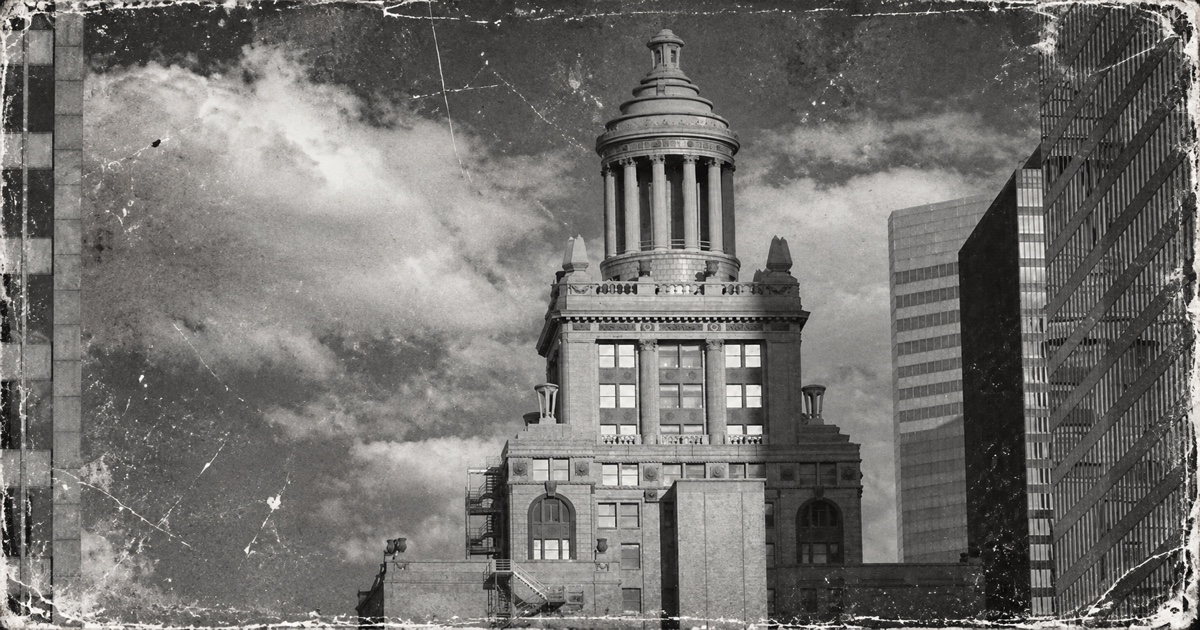
The Esperson Buildings are impossible to miss if you know where to look in downtown Houston. The original Niels Esperson Building rose at Travis and Rusk in 1927, and for a time it was the tallest building in Texas. Its companion, the Mellie Esperson Building, came later and completed one of Houston’s most recognizable office complexes. The architecture itself is part of the story: ornate, theatrical, and deliberately memorable, with a grandness that seems to invite a legend. (tshaonline.org)
The familiar haunted narrative begins with grief. Niels Esperson was a Danish-born businessman who made his fortune in oil and real estate, and Mellie Esperson commissioned the first tower as a memorial after his death. That much is well documented. What is often repeated more loosely is the idea that the buildings were built around a single tragic romance, then left to echo with his sorrow. The historical record is less melodramatic, but no less interesting. (tshaonline.org)
The love story Houston kept retelling
The most persistent version of the legend says Niels Esperson still wanders the halls, searching for Kathleen, or for the life he imagined with her. Legacy accounts also describe heartbreak, separation, and a lingering presence in the tower long after his death. Those details have helped make the buildings one of Houston’s better-known haunted landmarks, but they belong to folklore and retelling, not to independently verified history. (en.wikipedia.org)
A cleaner reading of the record suggests something simpler: the buildings became a vessel for public memory. Once a structure is tied to wealth, loss, and dramatic architecture, it tends to attract stories that explain why it feels solemn after dark. The Esperson complex has that effect in daylight too. The style is formal, the ornament heavy, and the scale unusually commanding for downtown Houston. Even without a ghost story, it carries the mood of a place built to be remembered. (houstonheritagehub.org)
What people say they’ve seen in the halls
The paranormal claims attached to the Esperson Buildings are mostly witness reports: a figure at an upper-floor window, a presence in an elevator, apparitions reflected in restroom mirrors, odd sounds in empty corridors. One Houston Chronicle account noted that the “reportedly haunted” Esperson Buildings were still generating stories decades after completion, and that a renovation of the lobbies in 2016 did nothing to quiet the lore. But those reports remain anecdotes, not proof. (chron.com)
That distinction matters. A sighting in a workplace building can be sincere without being conclusive. Old towers have drafty shafts, reflective surfaces, mechanical noises, and light that changes dramatically from floor to floor. In a structure as layered as the Esperson complex, the ordinary can easily feel staged. The building does not need to produce a documented haunting to become a favorite subject for ghost stories. (houstonheritagehub.org)
Why elevators, mirrors, and windows feed the story
These are the places where perception plays tricks most easily. A mirror can split a corridor into angles the eye doesn’t immediately trust. A window on a high floor turns a person into a silhouette. An elevator, with its mechanical hum and brief stops, practically manufactures unease. In a building already linked to memorial symbolism, those sensations get collected into a story that feels older and more certain than it really is. This is inference, but it fits the way the Esperson legend has endured. (houstonheritagehub.org)
The building that outlived its first story
The Esperson Buildings are still part of Houston’s architectural memory, and official historic-preservation materials treat them as significant landmarks rather than curiosities. The city’s preservation framework recognizes historic buildings for their architectural and historical value, and the Esperson complex continues to be discussed in that context. Even recent business coverage has framed it as one of downtown’s notable historic office properties, not just a ghost-tour stop. (houstontx.gov)
That longevity may be the real source of the haunting atmosphere. Buildings that survive long enough collect their own afterimages: old ownership, changing tenants, renovations, rumors, and the habits of everyone who passed through before. The Esperson towers have all of that. Whether the ghost story began with a report, a rumor, or a little creative embroidery, it has lasted because the building gives it something to cling to. (chron.com)
The unresolved figure at the window
If the Esperson Buildings are haunted, the haunting is as much about Houston’s memory as it is about any reported apparition. The towers still stand as memorial architecture, downtown landmarks, and a ready-made stage for the city’s favorite kind of restless story. What remains unresolved is not whether the legend exists, it clearly does, but how much of it belongs to the building itself, and how much was projected onto it by everyone who has looked up at that window and wondered who, or what, was standing there. (tshaonline.org)