A place built from houses that refused to disappear
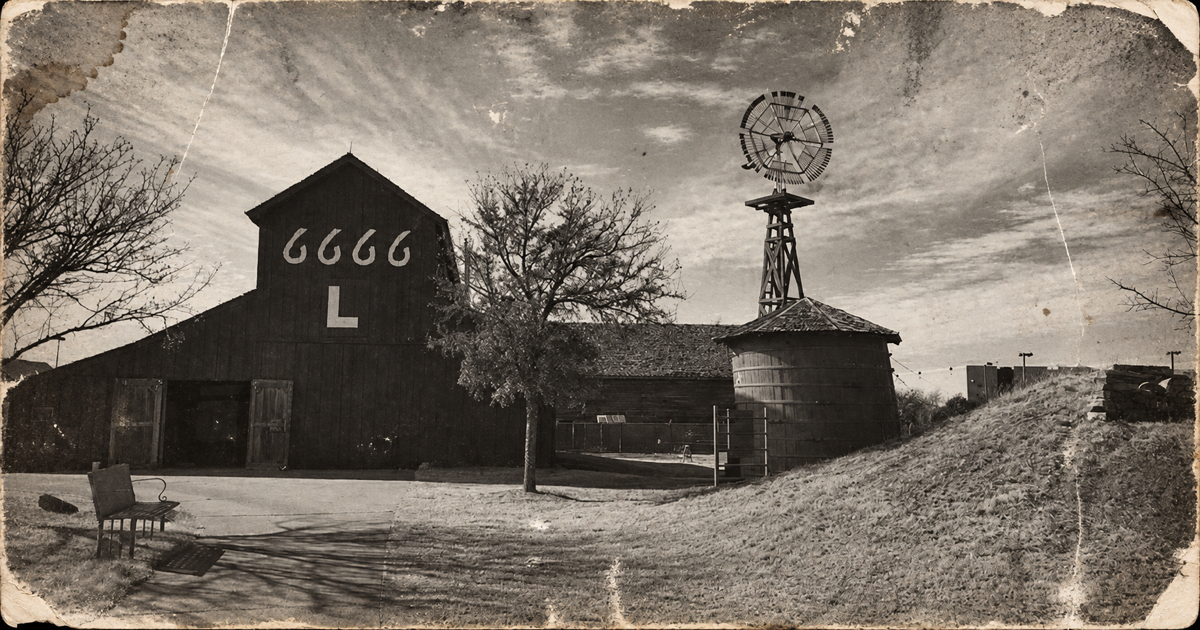
The National Ranching Heritage Center in Lubbock is not a single haunted house so much as a campus of ranching history: an outdoor museum of restored and relocated structures tied to the story of ranch life in Texas and the Southwest. The center sits beside Texas Tech University and was developed over years of preservation work, with multiple historic buildings moved, restored, and assembled into an interpretive landscape. By the time the center officially opened in 1976, it had become a major repository of ranching memory rather than a single legend with a single ghost. (tshaonline.org)
That matters, because places like this usually accumulate stories the way old wood gathers dust. Yet the NRHC has never circulated with the kind of dense ghost folklore common to courthouses, hotels, or abandoned homes. Its reputation is quieter, and that quiet is what makes the few reported experiences stand out. (ghosttexas.com)
The Barton House and the thin thread of ghost reports
The most repeated haunted claim attached to the NRHC seems to center on the Barton House. The official ranching heritage site describes it as the former home of Joseph James Barton, built in 1909 and later bequeathed to the center by Josephine Barton after his death. The house was moved to the NRHC to preserve it as part of the larger historical park. (ranchingheritage.org)
That same house is where the legacy Ghost Texas piece found the clearest paranormal reports: sightings of figures inside the Barton House, a woman allegedly seen in an upper window, and the occasional story of footsteps on the grounds. Those accounts appear in local coverage and in the earlier Ghost Texas article, but they remain witness reports rather than independently verified events. In other words: they are part of the museum’s folklore, not established fact. (ghosttexas.com)
Why the silence feels almost suspicious
What makes the NRHC unusual is not that it has ghost stories, but that it has so few. The center preserves a broad sweep of ranching architecture, historic structures, furnished interiors, and interpretive spaces tied to daily life on the frontier, the sort of environment that tends to inspire tales of echoes, apparitions, and unfinished business. The official materials emphasize the authenticity of the structures and the scale of the collection, which gives the place an atmosphere rich enough for memory to cling to, whether or not that memory is paranormal. (ranchingheritage.org)
That scarcity of ghost lore may say less about the absence of strange experiences and more about the kind of place this is. The NRHC is a working museum, not a decayed ruin. It is curated, interpreted, maintained, and visited. Historic spaces that are actively cared for often produce fewer dramatic ghost stories than sites allowed to ferment in neglect. That is an inference, not a documented rule, but it fits the shape of the evidence here. (ranchingheritage.org)
The strange power of preserved ordinary life
The most interesting thing about the NRHC is that it preserves ordinary life with unusual seriousness: cookhouses, schoolrooms, blacksmith spaces, ranch homes, and working buildings that once held meals, arguments, repairs, births, and funerals. Texas Tech’s oral-history material on the center underscores how many structures were painstakingly moved and reassembled, sometimes with major logistical effort, to preserve historical integrity. The result is a museum that feels less like a theme park than a frozen corridor of lived experience. (oralhistory.swco.ttu.edu)
That kind of environment can produce a different sort of haunting, not always a face in a window, but a lingering sense that human lives once pressed close against these walls. Paranormal interpreters might call that residual energy; skeptics would call it atmosphere shaped by history. Either way, the feeling is inseparable from the architecture. The NRHC’s buildings do not need ghost stories to be uncanny. Their preservation is eerie on its own. (ranchingheritage.org)
A museum where the unanswered part is the point
The legacy Ghost Texas article wondered whether the lack of reported activity meant the center was peaceful, dormant, or simply under-observed after hours. That question still hangs over the site. Publicly documented ghost lore is sparse, and no reliable source turned up a thick archive of sightings to match the scale of the museum. What remains is a narrow band of reports around the Barton House and a much larger body of ranching history that has been carefully preserved. (ghosttexas.com)
That may be the NRHC’s real mystery. In a place built to keep the past from vanishing, the absence of louder haunting claims almost feels like its own kind of echo. Whether that quiet comes from peace, from good stewardship, or simply from a story that has not fully surfaced yet, the question stays open in the wind between the old buildings. (ranchingheritage.org)