A hotel that outlived the town’s first version of itself
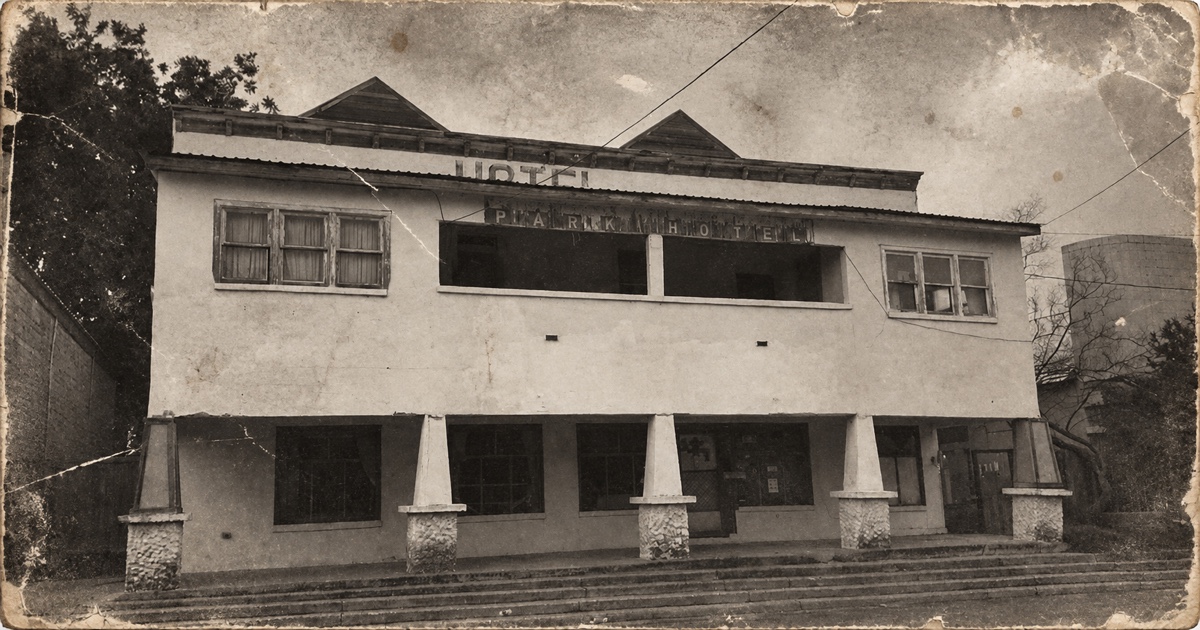
The Olde Park Hotel in Ballinger, Texas, does not survive as a simple relic. It is the kind of building that gathers stories the way old wood gathers weather: one layer at a time, with time, loss, and repetition doing most of the work. The site’s documented history begins in the late 19th century, when the Park Hotel stood as part of Ballinger’s early growth. Texas Historical Commission material notes that Centenary College moved into the vacant Park Hotel in 1894, and that the hotel burned a year later, in 1895. Ballinger itself had been a railroad town in a region shaped by the Gulf, Colorado & Santa Fe Railway’s expansion westward. (atlas.thc.texas.gov)
That history matters because it grounds the story in something firmer than the usual haunted-hotel blur. The building’s haunted reputation belongs to the present-day Olde Park Hotel identity, but the older Park Hotel story explains why this place feels so charged: there was real civic use here, real loss, and a building that became part of local memory long before paranormal tourism ever entered the picture. (atlas.thc.texas.gov)
How the haunting legend took hold
The modern ghost story attached to the hotel is not documentary history; it is folklore built around the building’s later life and the people who began visiting it for that very reason. Local reporting has described the hotel as a destination for paranormal curiosity, especially after new owners leaned into its reputation as a haunted property. A 2016 San Angelo LIVE! report identified Dan and Connie LaFave as owners of the Olde Park Hotel in Ballinger and noted plans for haunted events and paranormal programming. That is an important distinction: the hauntings are being actively interpreted, marketed, and investigated, which does not make them false, but does mean they are not independently verified historical fact. (sanangelolive.com)
The legacy Ghost Texas version of this story mentioned whispers in empty rooms, unexplained noises, and apparitions of former guests. Those are best understood as witness reports and retellings, not established evidence. They may be sincere. They may reflect suggestion, memory, acoustics, or the power of a setting that already invites expectation. What they do not do, by themselves, is prove a haunting. (ghosttexas.com)
The woman in the room, and the story that won’t sit still
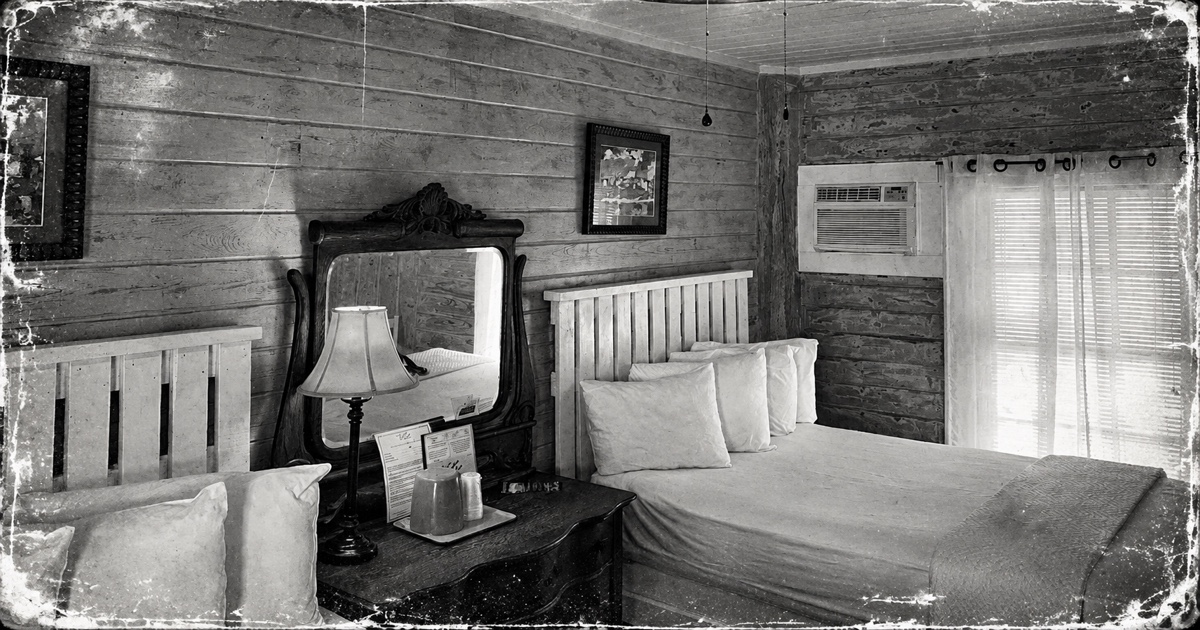
Among the better-known claims tied to the Olde Park Hotel is the legend of a young woman said to have been murdered in one of the rooms, with her killer never found. In ghost-story terms, it is a classic setup: a violent death, an unresolved case, and a spirit believed to remain behind in search of justice. But no reliable historical source in the research surfaced to confirm that specific murder as a documented event at the hotel. That means it should be treated carefully, as a local legend or alleged backstory rather than fact. (ghosttexas.com)
That caution does not drain the story of atmosphere; it sharpens it. A rumor with no archival support can still matter culturally because it reveals what people expect from the building. The legend frames the hotel as a place where suffering left a mark strong enough to outlast the people who first told the tale. Whether the source was a true crime, a misremembered incident, or simply a story built to fit the building, the result is the same: visitors arrive already listening for something. (ghosttexas.com)
Why investigators keep returning
The Olde Park Hotel’s endurance as a paranormal destination owes a lot to the overlap between historic preservation and ghost-hunting culture. Owners and visitors have continued to present the building as a place where unexplained events deserve attention, and online paranormal communities have repeated that framing for years. Some accounts describe apparitions, cold spots, disembodied voices, and odd disturbances; others document investigations that produced little beyond suggestion and expectation. The public record does not resolve those claims either way. It simply shows that the hotel has become a stage for them. (sanangelolive.com)
That is often how Texas haunted sites persist. A building with an unusual past becomes a container for local memory, and each new retelling makes the next one easier to believe. In this case, the old hotel’s fire, its college chapter, its later revival as a haunted attraction, and the persistent human appetite for a good mystery all reinforce one another. The result is a story that is partly architecture, partly folklore, and partly performance. (atlas.thc.texas.gov)
What the Olde Park Hotel really offers the curious
If the Olde Park Hotel remains compelling, it is not because every ghost story attached to it has been proven. It is because the building sits at the intersection of documented small-town history and the kind of legend that refuses to fade once people begin telling it aloud. The archival trail confirms an old hotel, a college temporarily housed there, and a fire that erased that early chapter. The paranormal trail is less settled: reports, interpretations, and claims that continue to evolve with each new owner, investigator, or visitor who decides to listen for footsteps in the dark. (atlas.thc.texas.gov)
And that leaves the hotel with the question that gives haunted places their staying power: if so many stories have accumulated here, which ones began as history, and which ones began as people trying to explain the feeling of standing in a room where the past never seems completely gone?