The story starts with the building, not the ghost
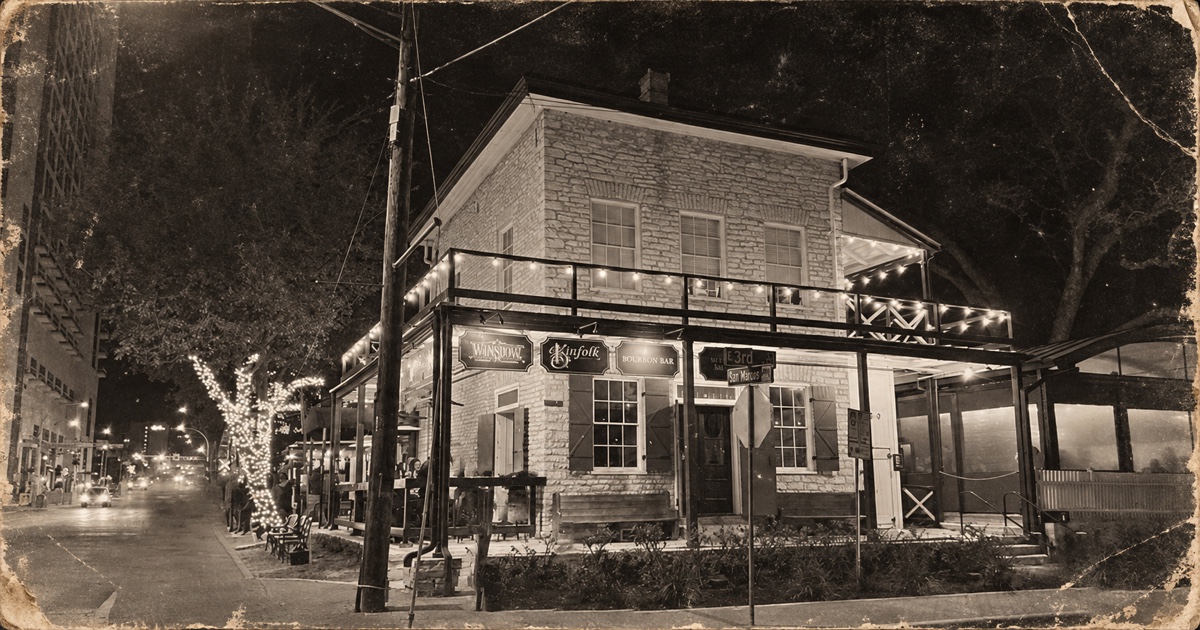
Moonshine Patio Bar & Grill’s downtown address at 303 Red River Street sits inside the historic Waterloo Compound, one of the oldest commercial clusters in Austin. The restaurant’s own history materials describe the property as a former general store and saloon tied to the city’s early development, with roots stretching back to the 1850s. That is the documented story: a working business site that changed with Austin, not a building whose haunted reputation can be cleanly reduced to one neat origin tale. (moonshinegrill.com)
What the records support, and what they do not
Moonshine’s official history emphasizes the Hofheintz-Reissig Store, the Sunday House, and other surviving pieces of the Waterloo Compound. The company says the property began as part of the old Waterloo settlement and later served as a mercantile, saloon, storm cellar, and, during Prohibition, a speakeasy. Those details are specific and repeat across Moonshine’s site and older promotional history materials. What they do not show is a primary-source claim that the downtown restaurant building was once a mortuary. In other words, the mortuary story circulates as a local legend, but it is not the version supported by the restaurant’s own published history. (moonshinegrill.com)
Why the mortuary rumor sticks
Haunted restaurant lore often grows where a building already feels layered and old enough to have seen several lives. Moonshine’s setting makes that easy: original limestone, a cellar with a Prohibition-era backstory, and a downtown location in one of Austin’s earliest commercial areas. A structure like that invites embellishment, especially when the mood is dim, the rooms are narrow, and the past is visibly close at hand. The mortuary claim may persist because it gives the building a single eerie identity, but the verified history is broader and more interesting than that. (moonshinegrill.com)
The ghosts people say they’ve noticed
The paranormal side of Moonshine lives mainly in report and retelling. Over the years, visitors and staff have described odd noises, a sensation of being touched, and sightings of figures that never quite hold still. One repeated story centers on a “Lady in White,” said to appear near the women’s bathroom or bar area. Other accounts mention a small boy and an older man. None of those claims appear to be independently documented in a way that would let them be treated as established fact, but they do fit a common pattern in haunted-house and haunted-restaurant lore: a place that serves the public by day becomes, after hours, a site where memory and imagination start working together. (moonshinegrill.com)
A historic room with enough atmosphere on its own
Moonshine’s strongest haunted-history detail may be the one that needs the least embellishment. The restaurant says its downtown home includes an original limestone cellar and historic spaces such as the Sunday House and Carriage House, each with a practical past rooted in Austin’s frontier-era commerce. Those rooms give the building its mood: not theatrical, but accumulated. A place can feel uncanny without being cursed, and it can carry stories without every story being true. That distinction matters here, because the real allure of Moonshine is not proof of a haunting. It is the way an old Austin property still makes the past feel physically close enough to notice. (moonshinegrill.com)
The unfinished question in the back of the room
Moonshine Patio Bar & Grill is haunted in the same way many historic places are haunted: by architecture, memory, and the stories people keep telling about what they felt in the dark. The mortuary legend remains unverified, but the building’s documented history is substantial enough to explain why the rumor took hold. Maybe that is the real riddle at 303 Red River Street, not whether the dead still walk there, but how a place with such a clear past became a canvas for a darker one. (moonshinegrill.com)