The hole, the legend, and the unease they leave behind
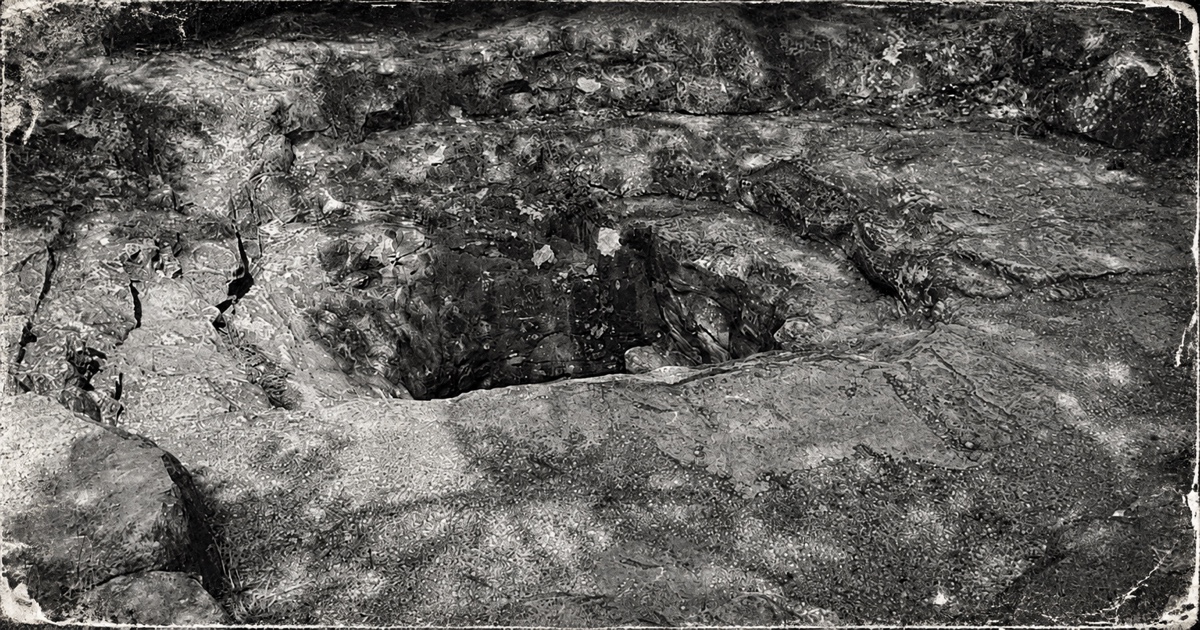
Dead Man’s Hole does not need much help to feel strange. It is a deep sinkhole south of Marble Falls in Burnet County, a natural feature that has attracted curiosity for decades. The Texas State Historical Association describes it as a sinkhole or cave in the Honeycut Formation, about 155 feet deep, with a Texas Historical Marker erected in 1998. The site was later deeded to Burnet County as a park. Those are the anchored facts. The rest is where the place gets its shadow. (tshaonline.org)
Local folklore has long tied the name to a darker story: that outlaws or other bodies were dumped into the hole after killings or lynchings. That version is part of the site’s haunted reputation, but it should be treated as legend unless independently documented. The historical record currently available through the Texas State Historical Association does not support the more dramatic dumping-ground claim as a settled fact. (tshaonline.org)
What the record says about Dead Man’s Hole
The official history is stranger in a quieter way. Dead Man’s Hole is a natural geologic feature, not a manmade pit, and it became notable enough to merit a state historical marker. In 1951, spelunkers descended it; later accounts in regional reference material describe the lower section as having “bad air,” a detail that helps explain why the place accumulated a reputation for danger as well as mystery. The site’s appeal has always been part geology, part story. (tshaonline.org)
That mix matters, because places like this often collect explanations faster than evidence. A dramatic name can invite a dramatic backstory, and once a location is tagged as haunted, later retellings tend to grow more certain with each repetition. Dead Man’s Hole seems to have followed that pattern: a real landmark, a real marker, and a folklore layer that became more vivid than the underlying documentation. (tshaonline.org)
Where the ghost stories take over
The paranormal claims are the most familiar part of the site’s modern identity. Visitors and ghost hunters have reported odd noises, splashing, voices, and the suggestion of figures near the water. Some tell of apparitions rising from the hole itself. Others describe chains, screams, or a feeling that something is present when the place should be still. These are witness reports and ghost-lore claims, not independently verified events. (tshaonline.org)
There is a natural explanation for some of that atmosphere. Deep water, enclosed limestone terrain, wind movement, and echo can make a remote geological feature feel active even when nothing supernatural is happening. The same physical conditions that make a sinkhole memorable can also make it easy to mishear or misread the surroundings. None of that disproves the stories; it only keeps them in the category they belong to: reported experiences, not confirmed hauntings. (tshaonline.org)
A public landmark with private interpretations
Today, Dead Man’s Hole sits in a different register than the old legend implies. It is recognized as a historic site and part of the Marble Falls area’s heritage landscape, not as a verified scene of frontier violence. Visit Marble Falls presents the town as a gateway to the Hill Country’s mix of nature and history, and Dead Man’s Hole fits that blend neatly: a real place with a memorable name that invites storytelling almost the moment you hear it. (visitmarblefalls.org)
That may be why the site remains so persistent in paranormal circles. It offers the ideal haunted-history ingredient list: a distinctive natural feature, a grim-sounding name, and a legend that is difficult to separate from the landscape itself. Once those elements are in place, every strange sound can feel like confirmation. The harder question is whether the stories reflect older events now lost to memory, or whether the legend simply grew around a pit that was unsettling from the start. (tshaonline.org)
The part that stays unresolved
Dead Man’s Hole endures because it refuses to settle into a single meaning. It is a geologic landmark, a local curiosity, a historic site, and a magnet for ghost stories all at once. The documented record gives us the shape of the place; folklore gives it a voice; witness reports give it a pulse. What remains unproved is the haunted part, and that uncertainty is exactly what keeps the hole open in the imagination. (tshaonline.org)