The ghost story Houston kept telling after the doors closed
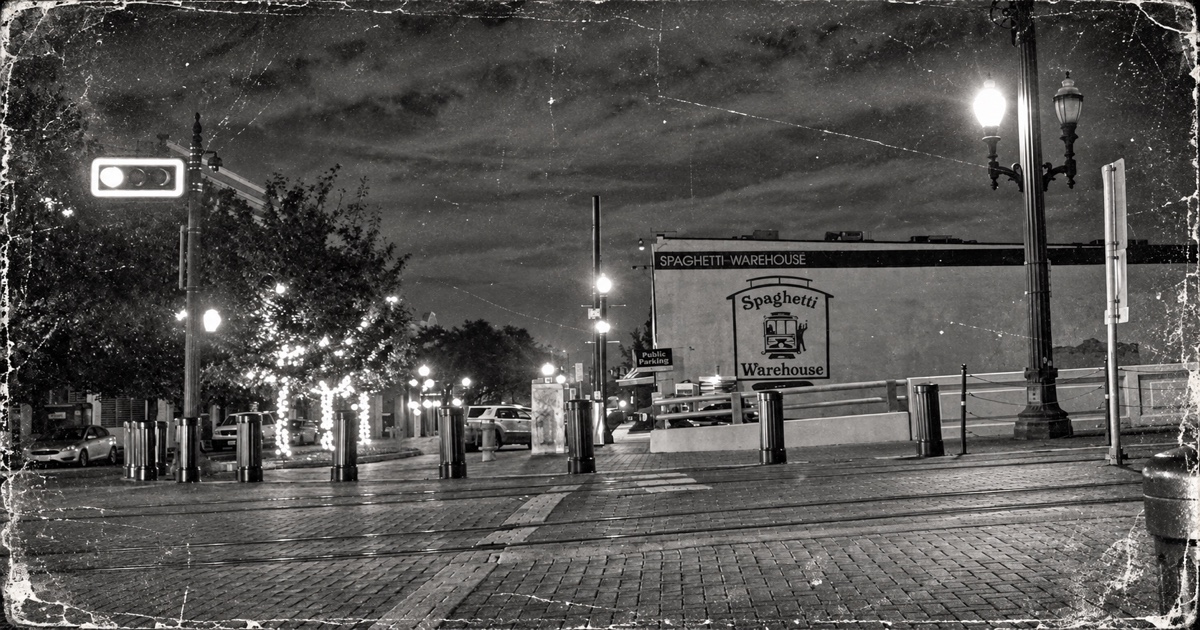
For years, the downtown Spaghetti Warehouse was as famous for its haunted reputation as it was for its pasta. The strongest version of that story centers on a woman who appears in white, usually identified in local lore as “the Bride,” and on a second, more persistent legend about a man connected to the building’s days as a pharmaceutical warehouse. Those claims became part of the restaurant’s identity, repeated in local media and ghost-tour storytelling long before the building itself was shuttered. But the atmosphere that made the place feel haunted was easier to document than the hauntings themselves. (chron.com)
A warehouse district built for commerce, not curses
The building stood in Houston’s historic warehouse district, an area that grew rapidly between the 1890s and 1930s as rail lines and Buffalo Bayou made downtown a natural center for trade and storage. City historic-preservation documents describe that district as one of Houston’s key industrial and commercial corridors from that era. The Spaghetti Warehouse site fit that pattern: an older warehouse repurposed for a restaurant, with the kind of brick-and-timber bones that naturally invite stories once the lights dim and the dining room empties. (houstontx.gov)
The bride in white and the story of the elevator shaft
The most repeated paranormal claim attached to the restaurant says a young bride died in an elevator shaft, or that a woman searching for her husband never left the building after he died there. Local newspaper accounts have circulated both versions, often without treating them as established history. In one common telling, the husband was said to have worked in the building when it operated as a pharmaceutical warehouse and died after falling down an elevator shaft; in another, the bride herself becomes the central figure. What matters is not certainty, but how durable the legend became. The story fit the space so well that it outlived the restaurant’s active years. (chron.com)
What can be verified, and what remains folklore
There is a useful split here. The building’s reuse as the Spaghetti Warehouse is documented. The warehouse district’s historic character is documented. The ghost stories, however, remain witness reports, legend, and later interpretation. Even the wording in local coverage suggests a tale passed along through repeated telling rather than a claim pinned to a surviving archive record. That does not make the stories meaningless; it makes them the kind of urban folklore that grows strongest in places already carrying age, vacancy, and memory. (houstontx.gov)
Harvey changed the building before the legends faded
Hurricane Harvey forced the restaurant’s closure after severe flooding, and the company later said it did not own the property and did not want to remain closed too long while major improvements were needed. By then, the building had already become part of Houston’s haunted geography, a place people associated with creaking corridors, antique interiors, flickering lights, and the bride story whether they had ever dined there or not. The flood ended the restaurant’s run, but it did not end the legend. If anything, abandonment gave the old stories a quieter stage. (spaghettiwarehouse.com)
Why Spaghetti Warehouse became a haunted Houston landmark
Not every haunted site needs a dramatic death certificate attached to it. Some become eerie because they sit at the intersection of public memory, old architecture, and stories told often enough to acquire a kind of authority. Spaghetti Warehouse Houston had that mix in abundance. It was a restaurant inside an older industrial shell, in a district already defined by historic reuse, and wrapped in a tale about a bride, an elevator shaft, and a woman searching the place forever after. Whether anyone ever truly saw her is unresolved. Why the story stuck is easier to understand: the building already looked like it remembered something. (houstontx.gov)