The Blue Ghost Arrives with More Than a War Record
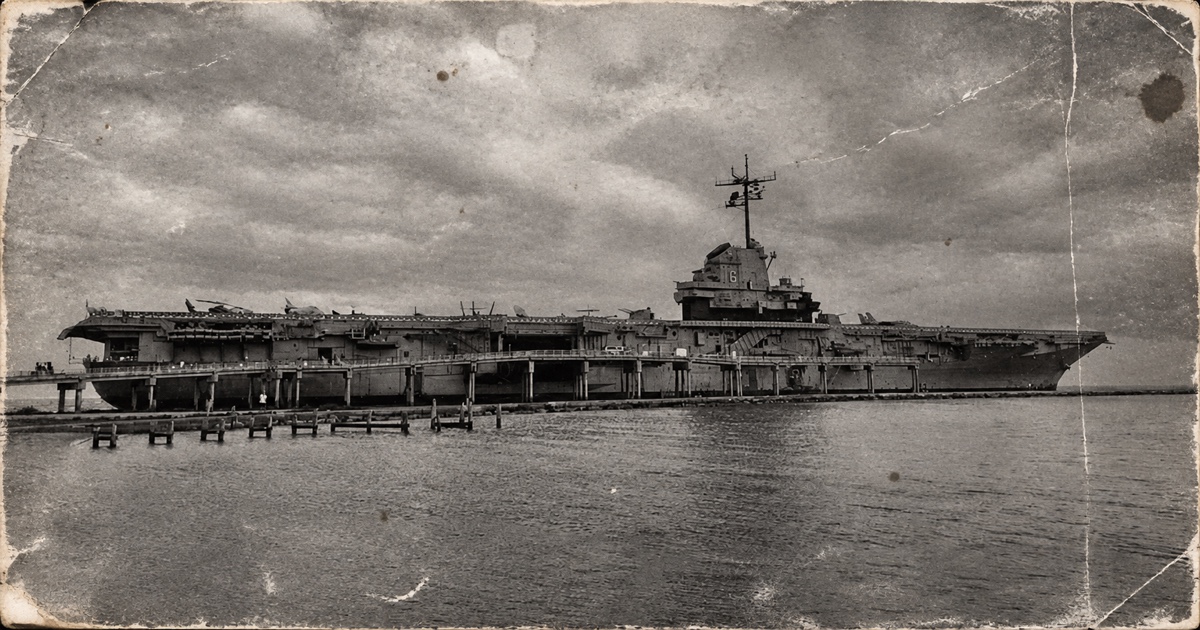
The USS Lexington is hard to miss from Corpus Christi’s shoreline, but its most enduring nickname came from the war years, not from the paranormal. The ship served in World War II and later the Vietnam era before becoming a museum in Corpus Christi in 1992. The museum’s own history notes that the carrier arrived at North Beach after a preservation campaign, and Naval History and Heritage Command records place the wartime Lexington in some of the Pacific’s fiercest fighting. (usslexington.com)
That background matters, because ghost stories cling more tightly to places with real loss, long service, and cramped steel spaces where sound carries strangely. On a ship like Lexington, every corridor seems built to hold a memory. The question is not whether the ship has history. It plainly does. The question is what parts of the haunting reputation belong to documented events, and what parts belong to the stories that grew afterward. (usslexington.com)
Where Wartime Damage Became Legend
The legacy story on this page mentions a boiler-room explosion and a sailor named Charlie. Reliable sources do not clearly support that specific character as a documented historical figure tied to the museum ship. What can be verified is that the original USS Lexington, CV-2, was lost in the Battle of the Coral Sea after torpedo damage caused major explosions and fires, including blast effects in the boiler-room area. That wartime destruction is real, severe, and central to the Lexington name’s long shadow. (history.navy.mil)
That does not prove a particular ghost story. It does, however, help explain why a “Charlie” figure could take root in popular retellings. In haunted-history terms, names often attach themselves to places that already feel marked by disaster. A story can become familiar because it sounds right, not because it can be traced to an archive. In the Lexington’s case, the wreck of the earlier carrier and the museum ship’s war service create exactly the kind of atmosphere that invites those additions. (history.navy.mil)
The Nurse, the Sailor, and the Story That Won’t Sit Still
The legacy article also repeats a more romantic legend: a wartime nurse said to haunt the ship after losing the sailor she loved. That tale, like the Charlie account, reads as folklore rather than independently verified history. No authoritative source surfaced here confirming a nurse on the museum ship who matches the details of the legend. (usslexington.com)
Still, the structure of the story is familiar in American hauntings: wartime separation, loss, and a final image that lingers long after the official record ends. The claimed apparition of a crying woman carrying a baby belongs to that emotional logic. It is vivid, memorable, and impossible to treat as fact without evidence. As a report, it remains an unresolved claim; as folklore, it tells us what kind of grief people associate with a ship that carried generations of service members through war. (usslexington.com)
Why the Ship Feels Haunted Even Before Any Ghost Story
Part of Lexington’s reputation comes from simple scale. The ship is a museum, but it is still a warship: steel corridors, enclosed compartments, hangar bays, ladders, machinery spaces, and long stretches where footsteps can echo or fade in misleading ways. The official museum site emphasizes its role as an aircraft carrier, educational facility, and tourist attraction, while the Navy records show a vessel with a heavy operational past. That combination alone can make ordinary sounds feel charged. (usslexington.com)
There is also a more ordinary explanation for some “hauntings”: suggestion. Visitors arrive expecting the Blue Ghost to behave like a haunted place, and the ship’s nighttime quiet can turn a draft, a creak, or a reflection into something larger. None of that erases the personal sincerity of witness reports. It simply means that an eerie experience on Lexington does not automatically become evidence of an apparition. (usslexington.com)
What Keeps the Lexington in the Ghost-Story Conversation
The USS Lexington remains a living museum, not a sealed relic, and that may be part of why its stories persist. People do not just come for a naval exhibit; they come to walk through a vessel whose past includes war, loss, and decades of accumulated memory. The museum’s own presentation leans into that identity, while the surrounding folklore adds its own layer of unease. (usslexington.com)
So the haunted reputation survives in the space between what can be proven and what keeps being retold. The ship is undeniably real. The wartime record is undeniably real. The ghosts of Charlie and the grieving nurse remain stories, not settled history. And maybe that is why the Lexington still works so well as a haunted landmark: it does not need invention to feel haunted, only enough unanswered questions to let the stories keep boarding.