The oldest walls in Austin still carry a long memory
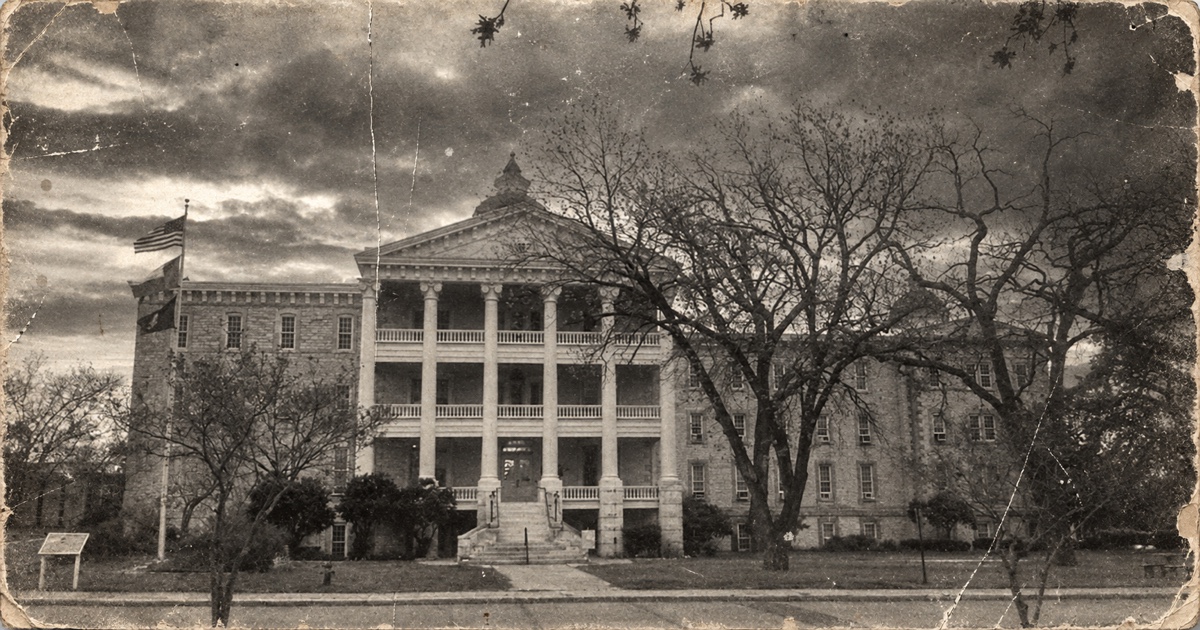
Austin State Hospital is not haunted because it is old alone, but age is part of why its reputation lingers. The institution began as the Texas State Lunatic Asylum, created by the Texas Legislature in 1856 and opened in 1861, making it the oldest state mental hospital in Texas. The Texas Historical Commission’s marker notes that the hospital opened with about a dozen patients and has remained dedicated to mental health care ever since. (atlas.thc.texas.gov)
That history matters because places built for long-term institutional care gather stories as quickly as they gather archives. Austin State Hospital has been part of Texas mental-health history for more than a century and a half, and the modern campus still sits inside a larger conversation about reform, treatment, and preservation. The atmosphere that fuels ghost stories is not invented out of thin air; it is built from real memory, real suffering, and a name that once sounded far harsher than it does now. (atlas.thc.texas.gov)
When the hospital became a setting for rumor
The legacy Ghost Texas article points to footsteps, voices, and a feeling of dread in older wings. Those are common forms of haunted-location reporting, but they are not independently documented as established facts in the sources reviewed here. They should be treated as witness claims and folklore rather than verified events.
That distinction matters at a place like Austin State Hospital, where the long institutional history can make ordinary sounds feel charged. Older corridors, utility spaces, and half-remembered stories can turn a creak into a presence. Paranormal audiences know that sensation well: a place does not need a confirmed apparition to develop a reputation for being watched. The claim survives because it is repeatable in conversation, not because it has been proven.
The Lady in White and the shape of a local legend
Among the best-known stories attached to the hospital is the so-called Lady in White. In the legacy version of the story, she is described as a sorrowful woman seen wandering the grounds and halls. I could not verify that figure in authoritative historical sources, so it should be understood as a local legend or witness-based report, not as documented history.
That does not make the story uninteresting. Quite the opposite. A Lady in White legend usually tells you something about how a community imagines grief: feminine, restless, visible at the edge of lamplight. At Austin State Hospital, that legend also leans on the emotional weight of the institution itself. A white figure in a place associated with institutional memory becomes more than a ghost story; it becomes a shorthand for unfinished business.
The East Wing, the old label, and why the story persists
The legacy article singles out the East Wing as a paranormal hotspot. I did not find primary evidence confirming that the East Wing is officially regarded as the most active area of the hospital, so that label should be treated as part of the ghost lore surrounding the site rather than a supported claim.
Still, the older sections of a state hospital are often the easiest places for legends to take root. Even when a building is renovated, the old names remain in circulation: asylum, ward, annex, wing, corridor. Austin’s former state hospital has also become part of a larger preservation story, with the Hogg Foundation and UT Austin tied to archival and historical work around the site. That kind of institutional attention tends to deepen public interest, which in turn gives the ghost stories new life. (hogg.utexas.edu)
Electroshock, stigma, and the darker imagination of institutions
The legacy article mentions electroshock therapy as part of the hospital’s unsettling past. That broad reference is plausible in the context of 20th-century psychiatric treatment, but the exact framing should not be overstated without a specific source tied to Austin State Hospital. What can be said with confidence is that the hospital belongs to an era when mental illness was heavily stigmatized and psychiatric institutions often inspired fear as much as hope. (hogg.utexas.edu)
That atmosphere is one reason haunted-hospital stories endure. When the public memory of a place includes confinement, obsolete treatment models, and long stays behind locked doors, paranormal interpretation becomes almost inevitable. A cold spot becomes a patient. A hallway sound becomes a voice. A difficult history becomes a lingering presence. The building does not need to be proven haunted for people to experience it that way.
What Austin State Hospital really leaves behind
Austin State Hospital’s documented past is already heavy: it was established in 1856, opened in 1861, renamed in 1925, and remains a central part of Texas mental-health history. The newly opened modern facility, described by UT-linked sources as part of a broader redesign effort, shows how the institution’s story is still being rewritten in real time. (atlas.thc.texas.gov)
That leaves the paranormal layer in an unresolved place. Maybe the footsteps people report are only the building speaking in ordinary old-house language. Maybe the Lady in White is a story Austin keeps telling because the hospital’s past invites one. Or maybe the real haunting is simpler and harder to shake: a place meant for care can also become a vessel for memory, and memory is often what people feel first in the dark.