Where the stone remembers, even when the stories blur
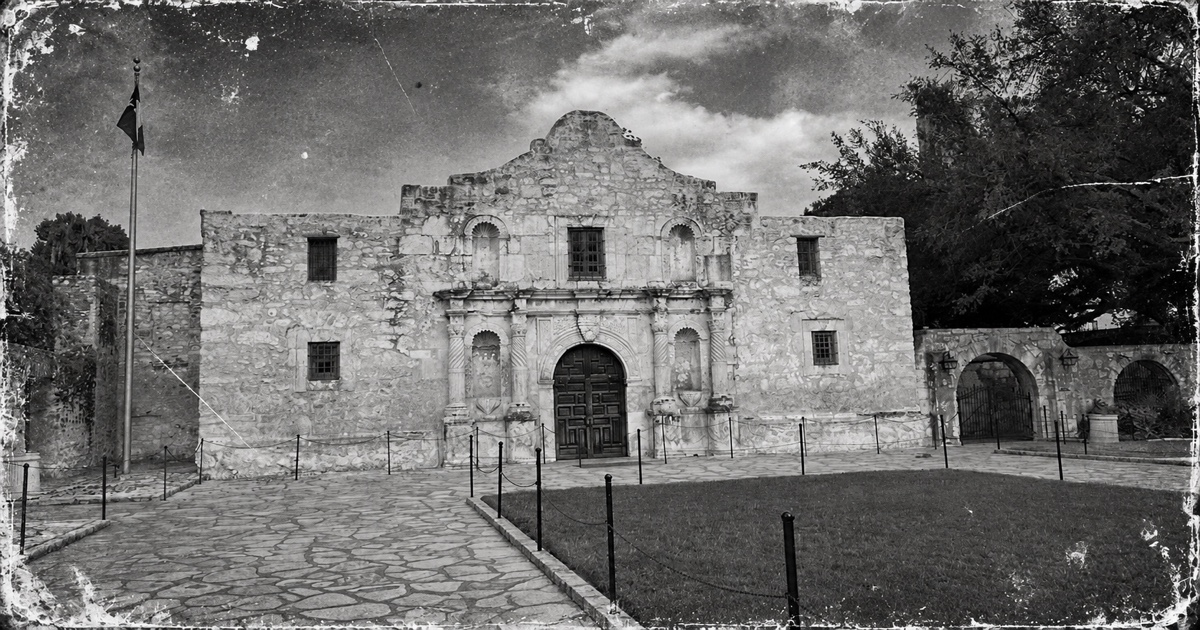
The Alamo’s reputation as a haunted place grows from something real: this was a mission first, then a fortified outpost, then the scene of the 1836 battle that made it an enduring symbol of Texas independence. The site’s official history reaches back to 1718, when Franciscan missionaries established Mission San Antonio de Valero, before the mission later relocated to its present location in 1724. The battle that fixed the Alamo in the national imagination came much later, on March 6, 1836, when the siege ended in a roughly 90-minute assault and all of the defenders were killed. (nps.gov)
That documented violence is the ground from which the ghost stories grew. When people stand in a place marked by siege, death, and memory, the human mind tends to fill in the silence with footsteps, voices, and movement just beyond the edge of sight. At the Alamo, the line between reverence and unease can feel especially thin.
The battle that made the hauntings believable
The Alamo’s modern ghost lore cannot be separated from the battle itself. The official record is blunt: the defenders, including William B. Travis, James Bowie, and David Crockett, died there after Santa Anna’s forces stormed the compound. Santa Anna’s own report described the assault as a victory, while later accounts and preservation efforts helped cement the site as one of the most emotionally charged places in Texas history. (thealamo.org)
That scale of loss explains why paranormal claims took root so easily. Visitors have long reported cold spots, the sensation of being watched, distant sounds, and shadowy movement on the grounds. None of those reports are independently verified as supernatural events, but they are consistent with the kind of folklore that gathers around places where history is both visible and violent. In other words: the haunting may be unproven, but the atmosphere is earned.
The church as the center of the unease
The Alamo church sits at the emotional center of the site, and it is where many ghost stories tend to concentrate. Some visitors and storytellers describe the interior as a place where the air changes suddenly, where sound seems to flatten, or where an unexplained heaviness settles in.
Those experiences do not prove a presence. They do, however, make sense in a place that serves as both historic structure and memorial landscape. The church is not just a backdrop for ghost tales; it is part of the reason the tales persist.
Monks, soldiers, and the legends that cling to sacred ground
One of the more colorful claims attached to the Alamo is the story of monk-like figures appearing on the grounds, sometimes described as protectors, sometimes as remnants of the mission’s religious past. The legacy article also refers to six ethereal monks guarding the site. That detail appears to belong to local legend rather than to any independently documented historical record, and it should be treated that way.
The same goes for reports of spectral soldiers patrolling the walls or replaying the battle in some endless loop. These stories are compelling because they fit the setting: a fortified mission, a shattered defense, and a site that has spent generations being asked to carry memory for Texas. The imagery is vivid, but vividness is not verification.
Why soldier stories endure
Soldier apparitions are common in battlefield folklore because they give form to collective grief. At the Alamo, that grief is tied to the dead of 1836 and to the mythology that grew afterward. The result is a place where almost any unexplained glimpse can be folded into the larger story.
That does not make the reports meaningless. It means they belong to the realm of witness tradition, not established fact.
Echoes, footsteps, and the problem with certainty
Accounts of strange lights, sudden noises, and the impression of cannon fire continue to surface in Alamo ghost discussions. Some of those experiences may be shaped by ambient city sound, weather, crowd movement, or simple suggestion. Historic sites often produce unusual sensory effects without any paranormal cause at all.
Still, the Alamo is not an ordinary historic building. Its surviving walls carry a weight that visitors feel even before they hear a story. The site has been preserved, studied, and reinterpreted so often that it now exists in two forms at once: as a documented place in Texas history and as a haunted symbol in the public imagination. The first can be verified. The second lives in memory, testimony, and legend. (nps.gov)
What the Alamo still leaves unanswered
The strongest ghost stories at the Alamo do not come from certainty; they come from the gap between what history records and what visitors think they experienced. That gap is where the legends of monks, soldiers, cold spots, and watchful shadows survive.
The Alamo’s real mystery may not be whether it is haunted. It may be why, after so many years, people still leave convinced that something on that ground noticed them first.