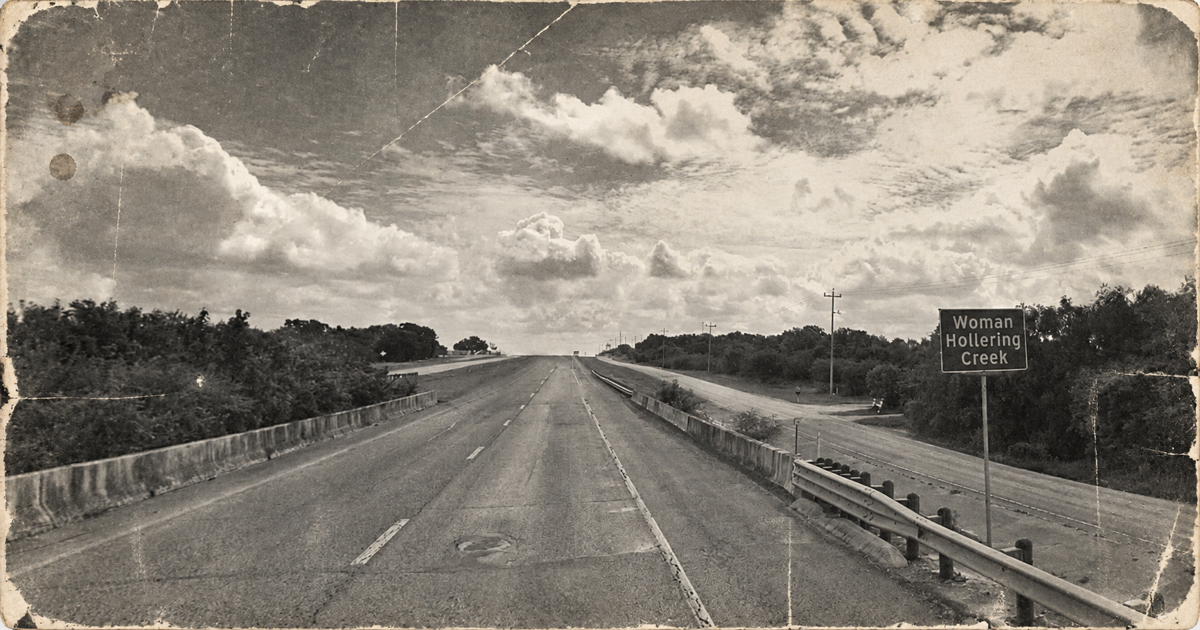
The sign that turns heads on I-10
Driving east of San Antonio, the name itself does the haunting. Woman Hollering Creek sounds less like a drainage crossing than the start of a warning whispered after dark. That dramatic impression is part of why the place has lingered in Texas memory for so long: the creek name invites a story, and people have spent generations supplying one.
But the record and the legend are not the same thing. The creek’s name is tied to the landscape near Saint Hedwig in eastern Bexar County, while the ghost story is a later layer of folklore built around that name. The unease comes first from language, then from imagination.
Saint Hedwig was a settled place long before the folklore settled in
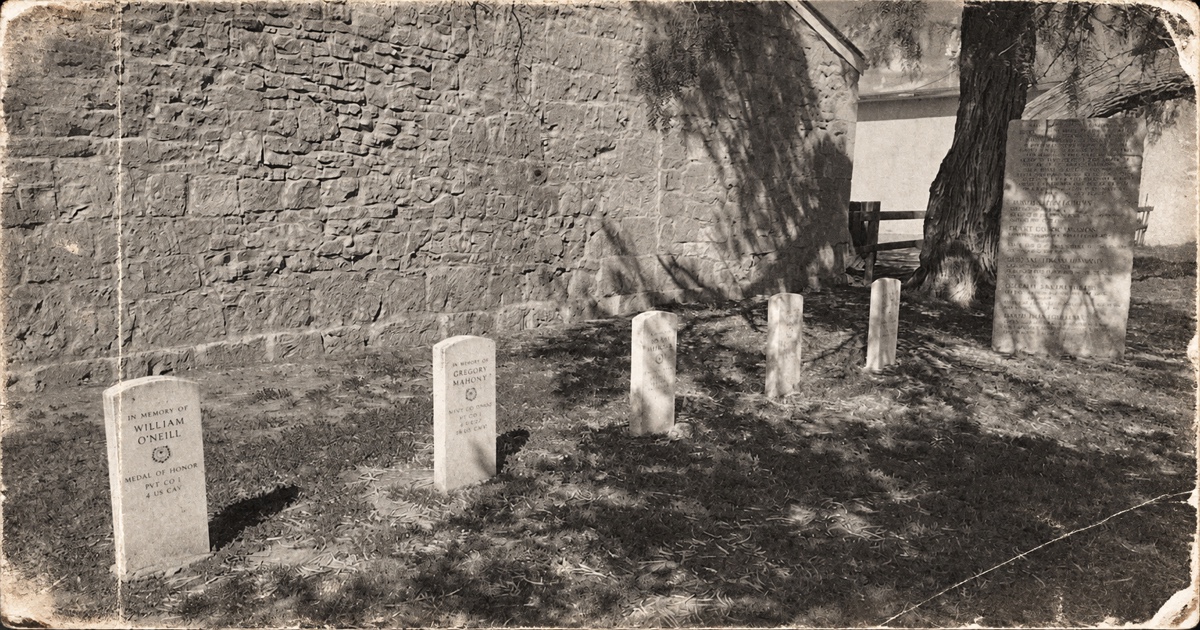
The community of Saint Hedwig traces its modern history to Upper Silesian immigrants who began arriving in the area in December 1854. By 1868, Silesian Catholics had begun construction of a sandstone church, and the settlement took the name Saint Hedwig to honor the patron saint of their homeland. The church was known as the Annunciation of the Blessed Virgin Mary. (tshaonline.org)
That matters because the creek sits in a place with a documented immigrant and parish history, not in a vacuum waiting for a ghost tale to fill it. The area’s local identity was shaped by farming, church life, and community building. The supernatural story came later, grafted onto a real geographic marker that had already earned its name in local usage. (tshaonline.org)
The crying woman story is really several stories
The most unsettling version, repeated in folklore collections and local retellings, tells of a mother whose children were attacked or drowned, after which she is said to have wandered the creek crying in grief. Other versions shift the details: an abandoned lover, an unwanted child, a murder-suicide, or a condemned soul denied peace until she finds the infant she lost. None of those versions should be treated as independently verified history; they are folklore, not documentation.
That matters because the tale changes depending on who is telling it. The shape stays the same, woman, water, loss, sound, but the facts bend. In paranormal storytelling, that usually means the story is doing cultural work, not preserving a courtroom record. The creek becomes a vessel for fear, grief, and punishment all at once. (mysanantonio.com)
Why the creek keeps sounding like La Llorona
Woman Hollering Creek is often linked to La Llorona, the widely known folktale of the weeping woman found across Mexico and the American Southwest. The Library of Congress notes that La Llorona’s backstory has evolved over time and that later elements were grafted onto older encounter tales. That makes the legend less like a single origin story and more like a living folklore tradition, changing as it travels. (blogs.loc.gov)
Sandra Cisneros’s 1991 collection Woman Hollering Creek and Other Stories helped push the name far beyond the local road sign. Her title story draws on the creek name and on the cultural weight of La Llorona, but the literary version is not the same thing as a firsthand account of a haunting. It is an artistic transformation of a place-name already ripe with dread. (latimes.com)
The literary shadow made the roadside name feel older than it is
For many readers, the title story became the version they encountered first. In Cisneros’s hands, the creek name feels intimate, ominous, and symbolic, which is one reason the roadside sign can seem to carry centuries of sorrow even though the published story dates to 1991. The literary fame of the title fed the folklore loop: people saw the name, remembered the story, and then assumed the story must explain the name. (latimes.com)
That is how haunted places are often made. Not by one provable incident, but by repetition. A name that sounds sorrowful gets attached to a legend; the legend gets attached to a literary work; the literary work sends curious travelers back to the sign. The creek ends up carrying a reputation heavier than the watercourse itself.
What lingers here is the feeling, not the proof
If Woman Hollering Creek is haunted, the haunting is at least partly one of story. The documented history points to Silesian settlement, church building, and a named creek in eastern Bexar County. The paranormal claim belongs to the realm of folklore: vivid, persistent, and impossible to verify in the way a deed or parish record can be verified. (tshaonline.org)
And yet the place keeps its power. A sign beside I-10 is enough to trigger the imagination, and the imagination has been doing the rest for decades. That may be the real mystery of Woman Hollering Creek: not whether a woman still cries there, but why so many people hear her when they pass.