Where Ballinger’s boomtown memory still lingers
The Olde Park Hotel sits in Ballinger, a rail town that grew quickly after the Gulf, Colorado and Santa Fe Railway pushed west in 1886. Ballinger’s early years were classic frontier-boomtown territory: saloons, gambling halls, drifters, and the sort of restless traffic that leaves behind stories as readily as it leaves behind buildings. The Texas State Historical Association notes that the town was laid out in 1886, officially named for William Pitt Ballinger, and soon became county seat in a landscape defined by sudden growth and hard edges. (tshaonline.org)
The building now known as Olde Park Hotel fits neatly into that atmosphere, but its own early chronology is harder to pin to a single clean line than the legacy lore suggests. Secondary accounts describe it variously as a hotel, boarding house, saloon, schoolhouse, and even a brothel or bordello at different points in its life. That much is consistent with the building’s reputation as a reused frontier structure; the exact order of those uses is less firmly documented in the sources available. (sanangelolive.com)
A building with many lives, and a few loose ends
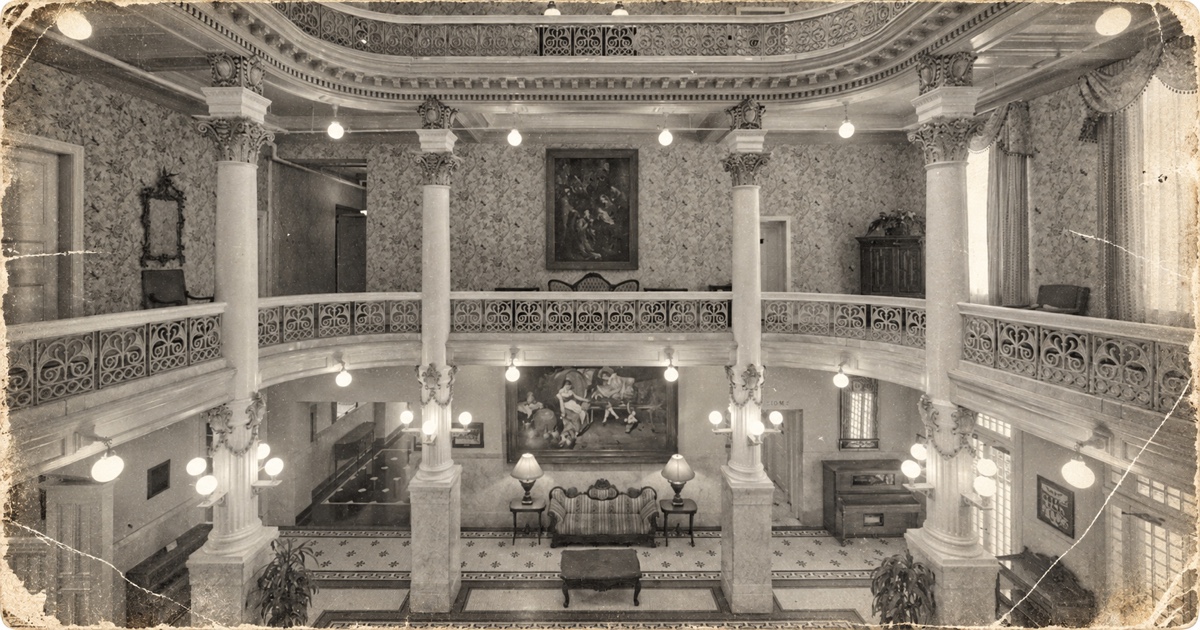
What can be said with confidence is that the Olde Park Hotel is not a one-story history. Local and regional coverage has described it as a late-1800s building that later became a venue for tours and overnight stays, with the LaFave family involved in its modern paranormal-era revival. That modern identity matters, because the hotel’s haunted reputation is now part of how the place is experienced, marketed, and remembered. (sanangelolive.com)
Some versions of the story connect the building to an old general store, while others emphasize its time as a school, saloon, or boarding house. Those overlaps are not unusual in West Texas buildings that outlived several generations of commerce. What they do suggest is that the hotel’s legend has grown in the space between documentation and oral tradition, where old structures become repositories for whatever the town still wants to remember. (sanangelolive.com)
The lady in white and the stories that followed her
The best-known ghost narrative attached to Olde Park Hotel is the recurring report of a woman in white moving through the halls. In the legacy Ghost Texas article, she appears as a drifting figure in Victorian dress; in broader online discussion, she is one of the hotel’s signature hauntings. But there is a difference between a widely repeated story and an independently verified apparition. The sources support the existence of the tale, not the spirit itself. (ghosttexas.com)
Other reported experiences are familiar to anyone who has spent time in historic-haunted-hotel lore: footsteps in empty corridors, voices with no obvious source, sudden temperature shifts, and the feeling of being watched. These are witness reports, not established fact. They may point to ambience, suggestion, old-building acoustics, or some mix of all three. Still, they are part of the site’s identity, and for many visitors they are the reason the hotel is worth the drive. (ghosttexas.com)
Room 4, where the legend concentrates
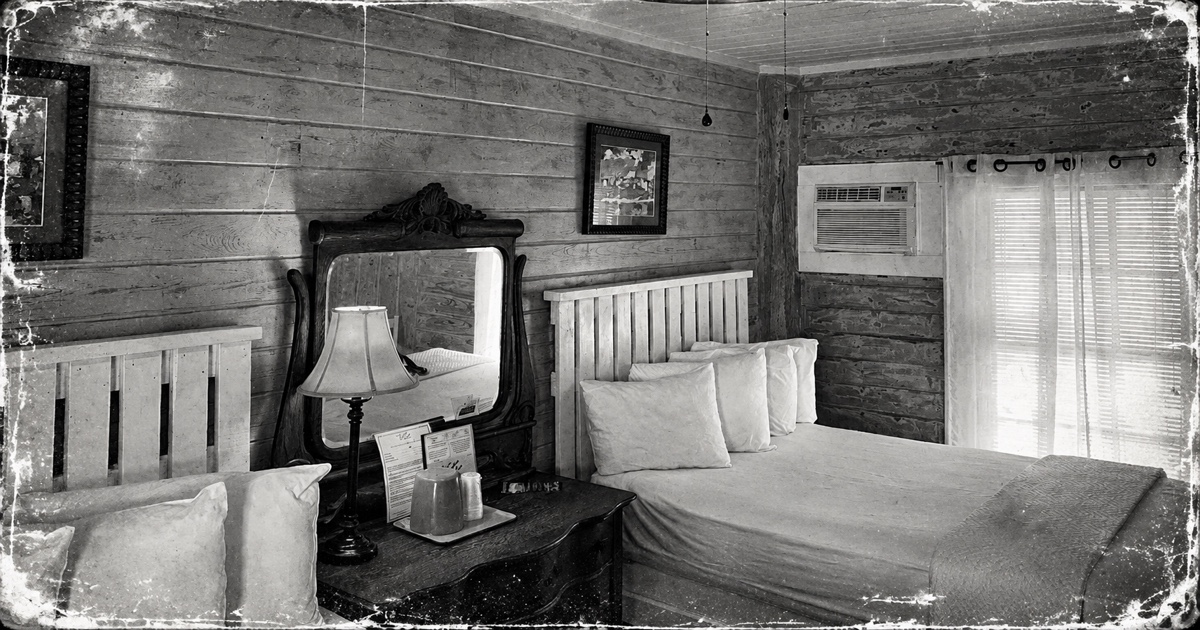
Among the hotel’s paranormal claims, Room 4 gets repeated often enough to function like a magnet in the story. In the legacy article, it is described as a place where guests have reported knocks, tapping, a drop in temperature, and heightened electromagnetic readings. None of those details are independently confirmed by the sources reviewed here, but they do reflect the way hauntings often gather around one room, one hallway, or one dramatic anecdote until the location acquires a sort of gravitational pull. (ghosttexas.com)
That is one of the more interesting features of the Olde Park Hotel story: the paranormal claims are less a single legend than a stack of them. A room becomes infamous. A hallway gains a watcher. A building that already has a complicated past becomes a stage for new retellings. The result is not proof of haunting, but it is proof of narrative momentum. (ghosttexas.com)
Why Olde Park Hotel keeps drawing the curious back
Olde Park Hotel endures because it sits at the seam between documented Texas history and the kind of folklore that grows strongest in places with layered pasts. Ballinger itself was born fast, fueled by railroad expansion, boomtown energy, and the rough commerce of a frontier county seat. A building with that backdrop does not need much embellishment to feel haunted; it only needs time, memory, and a few unresolved stories. (tshaonline.org)
The hotel’s ghost stories may never resolve into something verifiable, and that uncertainty is part of their staying power. Old buildings rarely surrender their histories all at once. Some keep their records in archives, some in local memory, and some in the stubborn way a hallway feels long after dark. Olde Park Hotel seems to contain all three, and that may be why the question around it has outlasted the answers. (tripadvisor.com)